Portfolio
Central Rock Gym
We built the connections between Rock Gym Pro, website leads, Mailchimp and reporting, turning separate customer records into a shared data foundation. Our work spans data extraction, record matching, marketing integration, conversion reporting and the ongoing support that keeps those systems working together.
Data integration & marketing operations
ConnectedRGP and website lead data
ActivatedCustomer data delivered to Mailchimp
ReportedValidation and marketing reporting in Tableau
The Problem
Customer information lived across gym-management records, website forms and marketing systems. CRG needed those sources to work together so its team could understand customer activity, use that information in marketing and check the data behind its reports.
Objectives
Bring operational and website lead data into a shared reporting foundation.
Deliver usable customer information to Mailchimp.
Connect campaign and form activity with purchase and membership records.
Give the team a way to validate data and investigate discrepancies.
Challenge
Moving records between platforms was only part of the work. Customer identifiers, shared email addresses, membership information and activity across different gyms did not always fit neatly into one marketing contact.
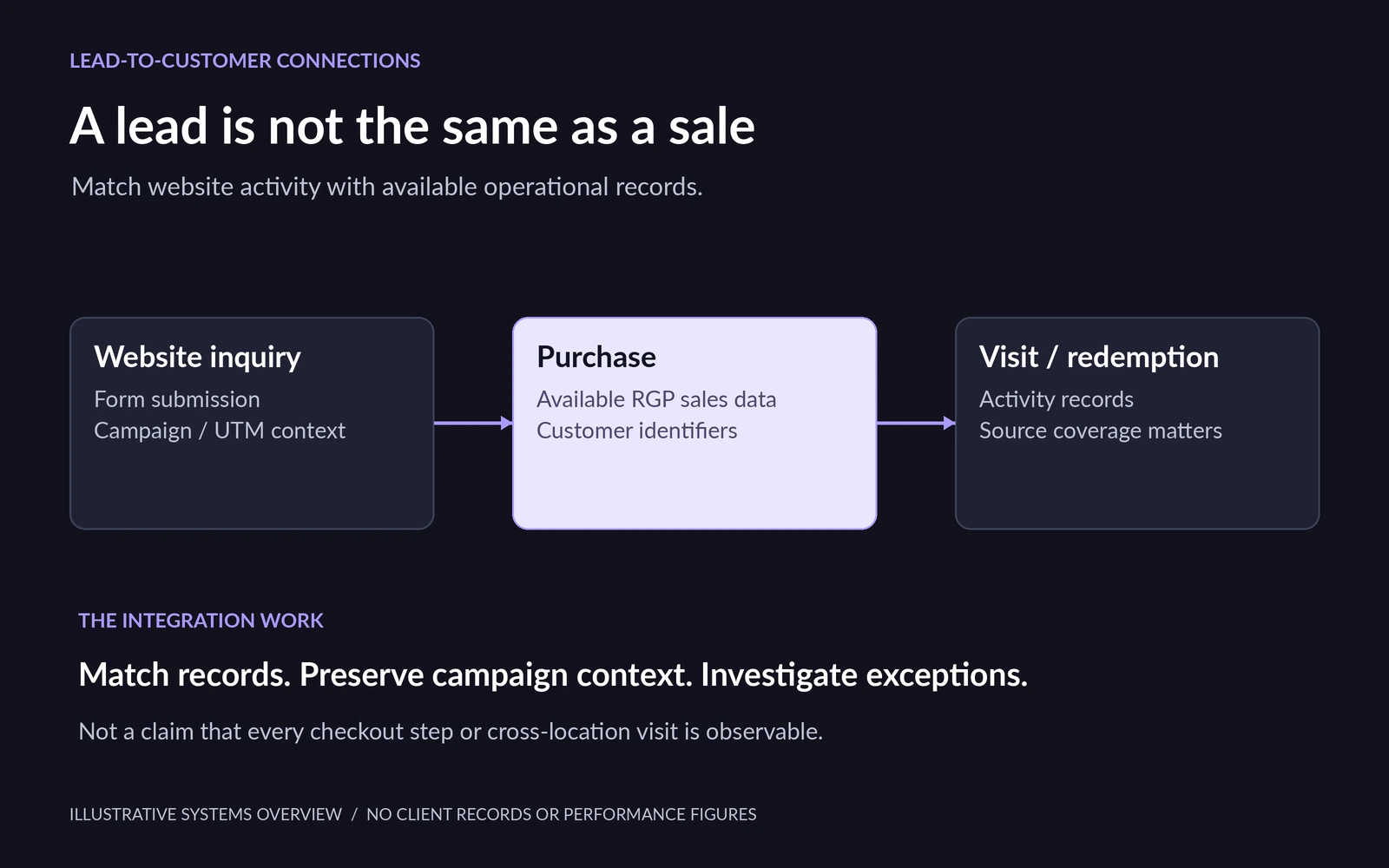
The integration had to distinguish between filling out a form, purchasing a pass and using it. It also had to reconcile membership history with customer records and account for existing email preferences and suppression data as the marketing platform changed.
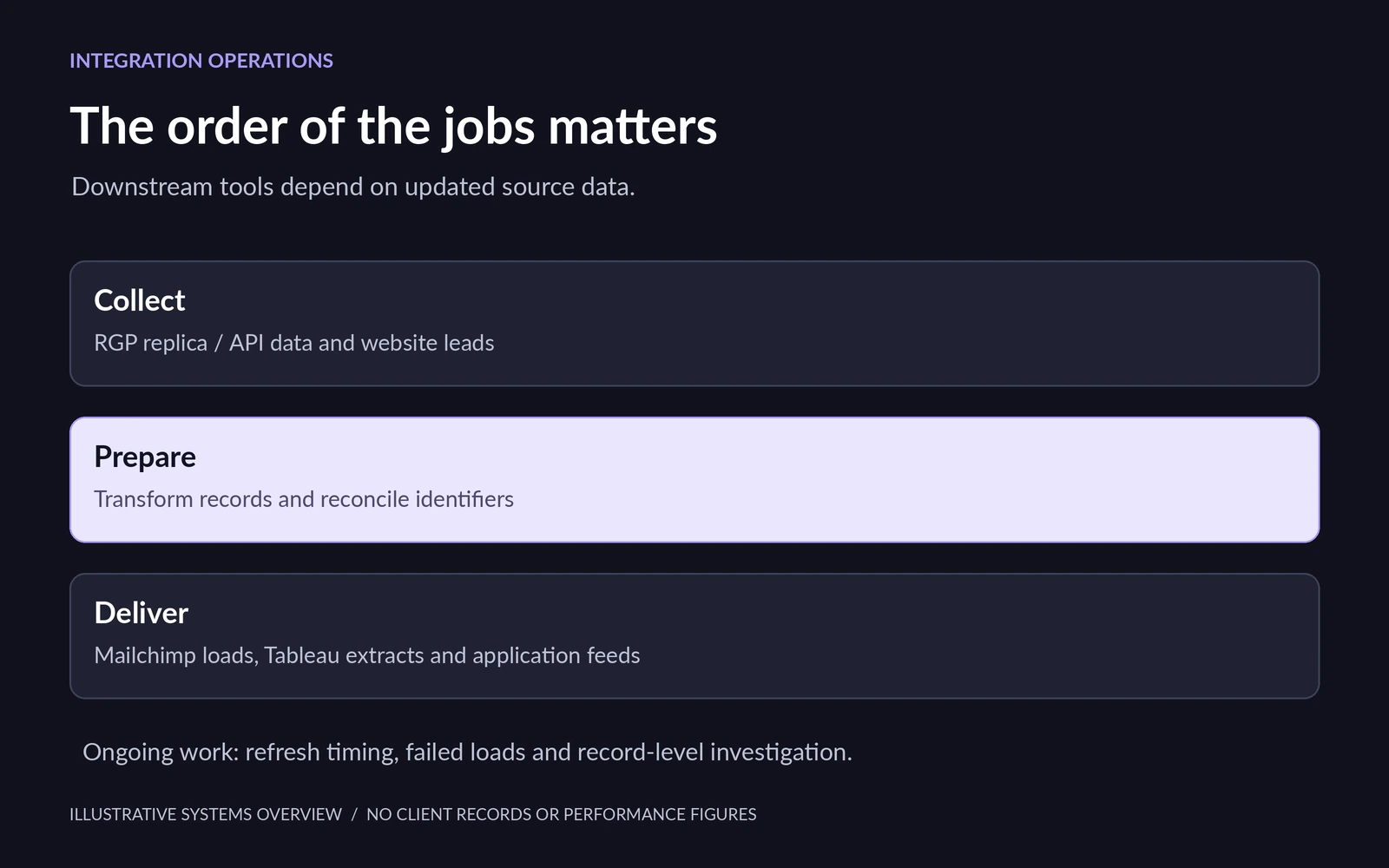
Reporting depended on the order in which systems refreshed. Source data had to arrive before downstream marketing loads and reporting extracts could use it. We needed to account for those dependencies and give the team visibility into exceptions, rather than hide them behind a dashboard.
Strategic Approach
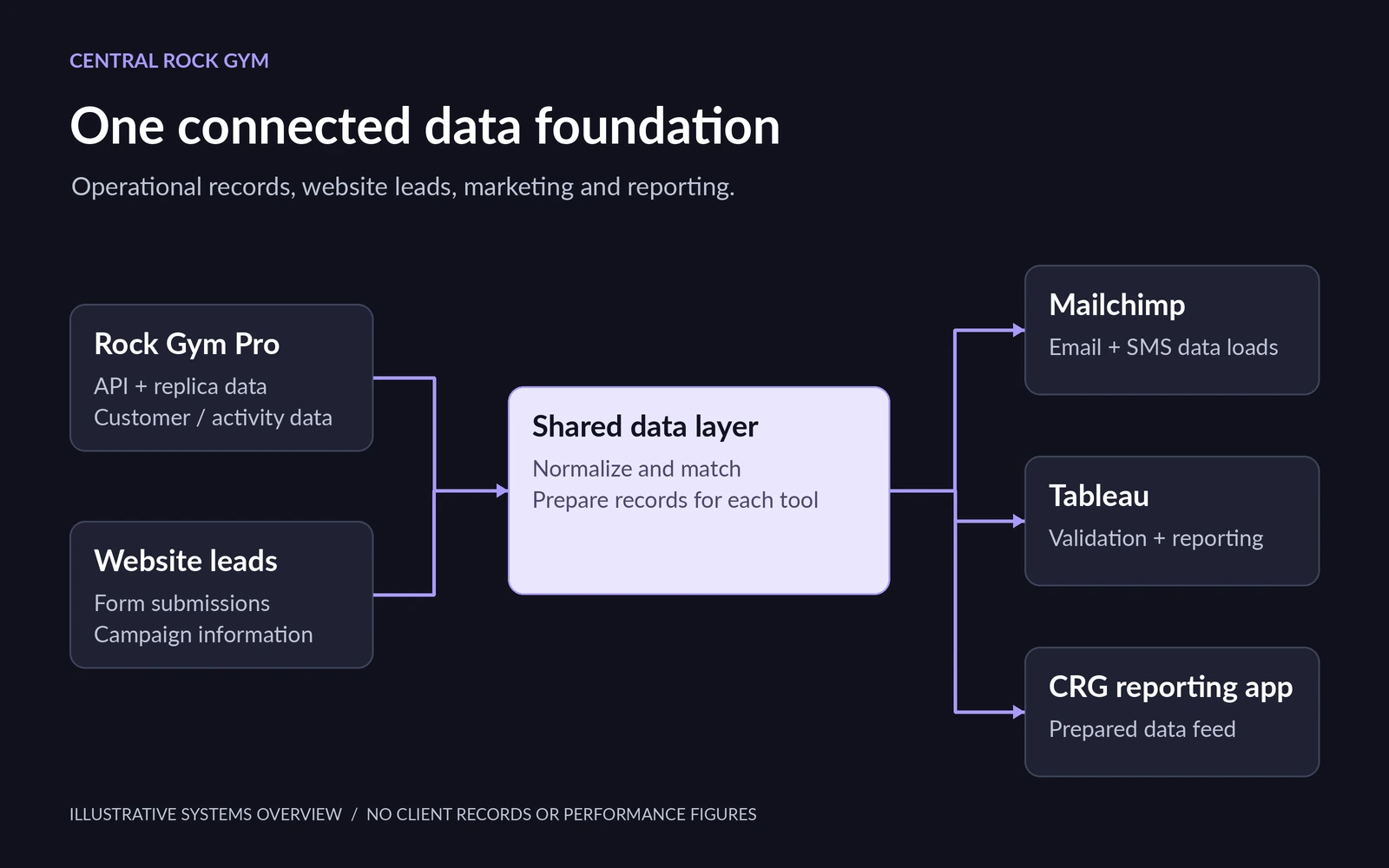
We built a middleware and data-warehouse layer between CRG’s operational systems and the tools its team uses for marketing and reporting. RGP API and replica-database processes bring operational data into that environment, alongside leads and campaign information captured on the website.
Within that layer, we normalize contact information, work through duplicate and shared identifiers, and map customer, membership, visit and purchase information into records the marketing system can use. We connect website leads with available RGP sales records so reporting can distinguish an inquiry from a purchase, and refine purchase-to-redemption logic as source-data exceptions are identified.
The Mailchimp work includes customer-data loading and separate SMS audience integration, rather than a one-time contact import alone. During the transition from SendGrid, the integration work also addressed legacy contact information and unsubscribe handling. Email preferences, SMS consent and platform-triggered messages are treated as distinct concerns, with vendor coordination where platform behavior needs clarification.
Scheduled processes feed Mailchimp, refresh Tableau extracts and supply data used by CRG’s own reporting application. We coordinate those dependent jobs so downstream tools can use the data collected upstream, and troubleshoot refresh timing and failed loads when they need attention.
We built Tableau validation views so the team could compare source data with what reached Mailchimp. Marketing and conversion reports bring together campaign information, form submissions and customer outcomes. This gives the team a way to investigate the underlying records, not just read a chart.
What we delivered
- Operational-data integration: RGP ingestion through API and replica-database processes, connected to a central middleware and data warehouse.
- Customer-data preparation: Normalization, deduplication and identifier matching to translate operational records into usable marketing contacts.
- Membership and activity mapping: Customer, membership, visit and purchase information prepared for downstream marketing and analysis.
- Website-to-middleware integration: Form submissions and campaign information routed into the shared data environment.
- Lead and purchase matching: Website inquiries connected with available RGP sales data for conversion reporting, with purchase/redemption logic refined against client examples.
- Mailchimp email integration: Transformed customer records and scheduled contact loads to support segmentation and marketing activity.
- Mailchimp SMS integration: A separate audience-loading process, with ongoing consent-status and platform-behavior troubleshooting.
- Validation tools: Tableau views for comparing source records with information loaded into Mailchimp.
- Marketing reporting: Campaign and conversion reporting linking lead activity with available purchase and membership data.
- Operational reporting feeds: Data supplied to Tableau and CRG’s reporting application.
- Integration operations: Coordinated refresh jobs, load troubleshooting, record-level investigation and continued integration maintenance.
Continuing integration work
The same data foundation supports continued work on class and event information. We have built event extraction and website-feed processes and are refining source coverage with RGP, including how offerings are categorized and which records are available.
We are also testing the connection between RGP bookings, cancellations and attendance and a customer’s Mailchimp activity history. The goal is to make those behaviors usable in marketing without confusing the person making a booking with the people attending it. Coverage and participant matching remain part of the ongoing validation work.
Collect. Prepare. Deliver. Validate.
The integrations, scheduled processes and support behind the dashboards.
RGPWebsite leadsMailchimpTableauReporting feeds
Outcome
CRG has a connected data foundation linking operational records, website leads, marketing contacts and reporting. The work goes beyond bringing information into one place: it prepares that information for use in Mailchimp, supplies reporting tools and gives the team validation views for investigating differences between systems.
The result is an operational integration layer, supported by scheduled processes and continued maintenance, rather than a set of disconnected dashboards. Reporting refinements, new activity feeds and data exceptions remain part of the system’s ongoing development.
Tags
Ready to Start the Conversation?
Every engagement begins with an introductory call. We’ll discuss your goals, answer your questions, and determine whether Virtual Window is the right fit.